5 Books I Enjoyed Reading in 2025
Keeping the tradition from previous years, here is my short list of 5 books I really enjoyed reading in 2025.
Why do I love reading books? They trigger in-depth, longitudinal inner dialogue focused on a single topic. Reading for 1–2 hours in a row helps me think deeply about a subject, build robust neural connections, and connect new knowledge to long-term memory. As a result, learning new skills becomes easier and my thinking stays sharper.
When I look at this list, I notice an interesting pattern: all my favorite books from 2025 are older than I am — some twice as old. Am I looking to the past to extrapolate timeless experience and integrate it into my life? Maybe.
Without further ado, in random order:
1. Coming Out of the Ice: An Unexpected Life - Victor Herman

If you think you're suffering, life is unfair, you're disadvantaged, or just have bad luck, wait until you hear Victor Herman's story. Imagine Arnold Schwarzenegger's arc - but reversed. From the top in the USA, his family moved to Russia, near Siberia. What was supposed to be a three-year trip turned into 18 years of exile and forced labor. For murder? No - for being honest and trying to help.
I listened to this book while doing heavy lifting during a house renovation, digging dirt at 10 PM in 5 °C until 1 AM. It changed my perspective on personal suffering: "I feel weak" became "burning the midnight oil" - that's sometimes the only way. I was shocked I hadn't heard of Victor sooner; what an amazing story and character.
2. Surely You're Joking, Mr. Feynman! - Richard Feynman
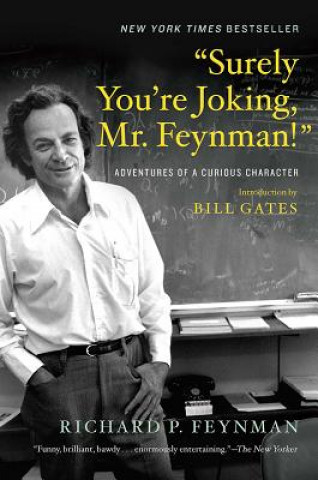
You may know Feynman from short, witty physics videos on YouTube. I wanted to know more about the man who worked on the Manhattan Project. He spoke Portuguese, Spanish, and Japanese, played drums, and described his own death in a famously understated way.
The book emphasizes valuing knowledge over money, meeting and falling in love with people, how to write code that only your spouse understands, and how to be honest and give feedback even if it costs you a Nobel Prize. If you're a knowledge worker, this book is about approaching knowledge with curiosity and constant experiments. Loved it!
3. The 48 Laws of Power - Robert Greene
The title sounds like marketing copy and made me ignore the book for a long time. I finally picked it up and decided: if the first three laws were bad, I'd drop it. They weren't - I was hooked. Robert Greene connects historical stories from ancient Greece, Napoleon, Machiavelli, Genghis Khan, and WWII leaders with modern-day figures in business and politics. Some methods seem harsh, but viewing them through the lens of family and personal priorities changes the perspective.
I've also read Mastery, and I'm currently reading The 33 Strategies of War by the same author. Highly recommended if you want to understand power dynamics in human relationships, whether in business or politics.
4. The Power of Ambition - Jim Rohn
Do you know Dale Carnegie? Jim Rohn could be his younger brother. I usually find motivational speakers repetitive, but Jim Rohn is different: honest, open-minded, focused, and real. He started in the 1960s, when this was still a bleeding-edge topic.
I listened to Jim Rohn when I started exercising. Weekly sessions with ever-increasing weight were a real challenge. The first week my body hurt five days in a row, the second week four days, and the third week four days again. I felt like giving up, so this book helped turn fear of suffering into a persistence game. Great book with many memorable lines. Very handy if you want a mindset shift.
- "But Jim, I'm tired." - "Do it tired."
- "But Jim, I might fail." - "Do it anyway."
From "Just do it" video.
5. 36 Views of Mount Fuji - Cathy Davidson
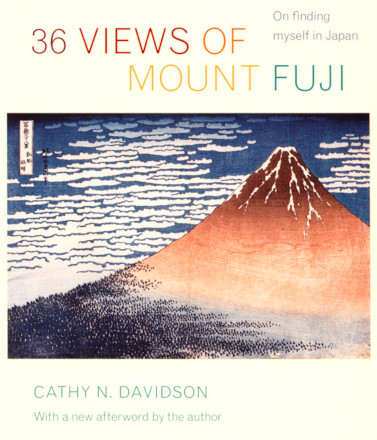
There are dozens of books on ikigai and kaizen, many riding the commercial success of those keywords. That said, it's hard to find a good, honest, and natural book on these topics. I was lucky to find this nearly 30-year-old gem.
Published in 1993, Cathy describes her travels from the U.S. to Japan to teach at an all-female university. She examines Japanese culture year by year, her love of the culture, ceremonies, and dualities. For someone like me who traveled to Japan last year, it was a great chance to refresh memories and compare them with the author's perspective from the 1980s.
I prefer first-hand travel, but this cultural snapshot from an era I wasn't even alive for was a deeply emotional experience.
That's it!
Happy reading and healthy 2026!
